About Australia - Infomation Australia
Learn all about Australia! Get interesting information about Australia and read up on our history, culture, movies, books and music.
Learn about Australian history, from the Aboriginal Dreamtime to British settlement, our convict history and the birth of a modern, multicultural nation.
Gain an insight into Australian culture, which is founded on notions of a ‘fair go’, love of the great outdoors and a dry sense of humour. Learn more about Australians - our Aboriginal culture, our legendary folk heroes, modern day heroes and the diverse nationalities that make up modern Australian society.
Check out our quirky and interesting information about Australia, with facts across a range of areas, from our record-breakers to Australian flora and fauna.
Want to know more about Kylie Minogue or Nicole Kidman or find out which Australian authors have won the Man Booker Prize? Get an overview of our film credits, award-winning authors and talented musicians.
Australia's History
Aboriginal people dream on a timeless continent
Australia’s Aboriginal people were thought to have arrived here by boat from South East Asia during the last Ice Age, at least 50,000 years ago. At the time of European discovery and settlement, up to one million Aboriginal people lived across the continent as hunters and gatherers. They were scattered in 300 clans and spoke 250 languages and 700 dialects. Each clan had a spiritual connection with a specific piece of land. However, they also travelled widely to trade, find water and seasonal produce and for ritual and totemic gatherings.
Despite the diversity of their homelands - from outback deserts and tropical rainforests to snow-capped mountains – all Aboriginal people share a belief in the timeless, magical realm of the Dreamtime. According to Aboriginal myth, totemic spirit ancestors forged all aspects of life during the Dreamtime of the world’s creation. These spirit ancestors continue to connect natural phenomena, as well as past, present and future through every aspect of Aboriginal culture.
Britain arrives and brings its convicts
A number of European explorers sailed the coast of Australia, then known as New Holland, in the 17th century. However it wasn’t until 1770 that Captain James Cook chartered the east coast and claimed it for Britain. The new outpost was put to use as a penal colony and on 26 January 1788, the First Fleet of 11 ships carrying 1,500 people – half of them convicts – arrived in Sydney Harbour. Until penal transportation ended in 1868, 160,000 men and women came to Australia as convicts.
While free settlers began to flow in from the early 1790s, life for prisoners was harsh. Women were outnumbered five to one and lived under constant threat of sexual exploitation. Male re-offenders were brutally flogged and could be hung for crimes as petty as stealing. The Aboriginal people displaced by the new settlement suffered even more. The dispossession of land and illness and death from introduced diseases disrupted traditional lifestyles and practices.
Squatters push across the continent
By the 1820s, many soldiers, officers and emancipated convicts had turned land they received from the government into flourishing farms. News of Australia’s cheap land and bountiful work was bringing more and more boatloads of adventurous migrants from Britain. Settlers or ‘squatters’ began to move deeper into Aboriginal territories – often with a gun - in search of pasture and water for their stock.
In 1825, a party of soldiers and convicts settled in the territory of the Yuggera people, close to modern-day Brisbane. Perth was settled by English gentlemen in 1829, and 1835 a squatter sailed to Port Phillip Bay and chose the location for Melbourne. At the same time a private British company, proud to have no convict links, settled Adelaide in South Australia.
Gold fever brings wealth, migrants and rebellion
Gold was discovered in New South Wales and central Victoria in 1851, luring thousands of young men and some adventurous young women from the colonies. They were joined by boat loads of prospectors from China and a chaotic carnival of entertainers, publicans, illicit liquor-sellers, prostitutes and quacks from across the world. In Victoria, the British governor’s attempts to impose order - a monthly licence and heavy-handed troopers - led to the bloody anti-authoritarian struggle of the Eureka stockade in 1854. Despite the violence on the goldfields, the wealth from gold and wool brought immense investment to Melbourne and Sydney and by the 1880s they were stylish modern cities.
Australia becomes a nation
Australia’s six states became a nation under a single constitution on 1 January 1901. Today Australia is home to people from more than 200 countries.
Australians go to war
The First World War had a devastating effect on Australia. There were less than 3 million men in 1914, yet almost 400,000 of them volunteered to fight in the war. An estimated 60,000 died and tens of thousands were wounded. In reaction to the grief, the 1920s was a whirlwind of new cars and cinemas, American jazz and movies and fervour for the British Empire. When the Great Depression hit in 1929, social and economic divisions widened and many Australian financial institutions failed. Sport was the national distraction and sporting heroes such as the racehorse Phar Lap and cricketer Donald Bradman gained near-mythical status.
During the Second World War, Australian forces made a significant contribution to the Allied victory in Europe, Asia and the Pacific. The generation that fought in the war and survived came out of it with a sense of pride in Australia’s capabilities.
New Australians arrive to a post-war boom
After the war ended in 1945, hundreds of thousands of migrants from across Europe and the Middle East arrived in Australia, many finding jobs in the booming manufacturing sector. Many of the women who took factory jobs while the men were at war continued to work during peacetime.
Australia’s economy grew throughout the 1950s with major nation-building projects such as the Snowy Mountains Hydroelectric Scheme in the mountains near Canberra. International demand grew for Australia’s major exports of metals, wools, meat and wheat and suburban Australia also prospered. The rate of home ownership rose dramatically from barely 40 per cent in 1947 to more than 70 per cent by the 1960s.
Australia loosens up
Like many other countries, Australia was swept up in the revolutionary atmosphere of the 1960s. Australia’s new ethnic diversity, increasing independence from Britain and popular resistance to the Vietnam War all contributed to an atmosphere of political, economic and social change. In 1967, Australians voted overwhelmingly ‘yes’ in a national referendum to let the federal government make laws on behalf of Aboriginal Australians and include them in future censuses. The result was the culmination of a strong reform campaign by both Aboriginal and white Australians.
In 1972, the Australian Labor Party under the idealistic leadership of lawyer Gough Whitlam was elected to power, ending the post-war domination of the Liberal and Country Party coalition. Over the next three years, his new government ended conscription, abolished university fees and introduced free universal health care. It abandoned the White Australia policy, embraced multiculturalism and introduced no-fault divorce and equal pay for women. However by 1975, inflation and scandal led to the Governor-General dismissing the government. In the subsequent general election, the Labor Party suffered a major defeat and the Liberal–National Coalition ruled until 1983.
Since the 1970s
Between 1983 and 1996, the Hawke–Keating Labor governments introduced a number of economic reforms, such as deregulating the banking system and floating the Australian dollar. In 1996 a Coalition Government led by John Howard won the general election and was re-elected in 1998, 2001 and 2004. The Liberal–National Coalition Government enacted several reforms, including changes in the taxation and industrial relations systems. In 2007 the Labor Party led by Kevin Rudd was elected with an agenda to reform Australia’s industrial relations system, climate change policies, and health and education sectors.
Australia's Culture
Australian culture is founded on stories of battlers, bushrangers and brave soldiers. Of sporting heroes, working heroes and plucky migrants. It’s all about a fair go, the great outdoors and a healthy helping of irony. Today Australia also defines itself by its Aboriginal heritage, vibrant mix of cultures, innovative ideas and a thriving arts scene.
Aboriginal culture: a rich and timeless tradition
The Dreamtime is the sacred ‘time before time’ of the world’s creation. According to Aboriginal belief, totemic spirit ancestors emerged from the earth and descended from the sky to awaken a dark and silent world. They created the sun, moon and stars, forged mountains, rivers, trees and waterholes and changed into human and animal forms. Spirit ancestors connect this ancient past with the present and future through every aspect of Aboriginal culture. Rock art, craft and bark painting reveal Dreamtime stories, mark territory and record history, while songs tell of Dreamtime journeys, verbally mapping water sources and other essential landmarks. Their special lyrics have been passed down virtually unchanged for at least 50,000 years, and are often accompanied by clapsticks or the deep throb of the didgeridoo. Similarly, traditional dances reveal creation myths, enact the deeds of Dreamtime heroes and even recent historical events.
Colonial myths: battlers, bushrangers and brave soldiers
Australians believe in mateship and a ‘fair go’ and have a strong affection for the underdog or ‘battler’. These values stem from convicts and early colonialists who struggled against a harsh and unfamiliar land and often unjust authority. Australia’s most famous bushranger Ned Kelly protested against the poverty and injustice of a British class system shipped here along with the convicts. This flawed hero’s fight for 'justice and liberty' and 'innocent people' has been embraced as part of the national culture and inspired countless books and movies. On the goldfields of the mid-1850s, diggers were portrayed in stories and songs as romantic heroes, larrikins and villains who embraced democracy. The bloody 1854 Eureka Stockade, where Victorian miners rose up against an authoritarian licensing system, came to symbolise a triumph of social equality. Later, during World War I, the courageous ANZAC soldiers who served in Gallipoli gave new meaning to the term ‘tough Aussie’.
Australian English: speaking ‘Strine’
Australians have a unique colloquial language, coined ‘strine’ by linguist Alastair Morrison (imagine saying Australian with your teeth gritted to keep out the flies) in 1966. This combines many long lost cockney and Irish sayings of the early convicts with words from Aboriginal languages. We often abbreviate words and then add an ‘o’ or ‘ie’ on the end as in ‘bring your cossie to the barbie this arvo’. We also like reverse nicknames, calling people with red hair ‘bluey’, saying ‘snowy’ to someone with dark hair, and tagging ‘lofty’ to someone who is small in stature. We tend to flatten our vowels and end sentences with a slightly upward inflection.
Sporting heroes: the glory of green and gold
It's no secret that Australians are sports mad. With more than 120 national and thousands of local, regional and state sporting organisations, it's estimated that six-and-a-half million people in Australia are registered sport participants. Not bad from a population of just over 21 million! The number one watched sport in Australia is Australian Rules Football (AFL) with its high kicks and balletic leaps, while the brute force and tackling tactics of National Rugby League (NRL) reign supreme in New South Wales and Queensland. Australia’s national Rugby Union team, the Wallabies play on the international circuit and in the Bledisloe Cup, part of a Tri Nations tournament with South Africa. Australia is a nation of swimmers and Olympic medals attest to our performance in the pool. All summer we watch the Australian cricket team in their whites and in January, we flick channels to see the tennis Australian Open. Held in Melbourne, this attracts more people to Australia than any other sporting event. Football is a growth sport, we draw world-class surfers for the Bells Beach Surf Classic and on Boxing Day crowds gather to watch the boats sail out of Sydney Harbour for the Sydney to Hobart Yacht Race. On the first Tuesday in November, the nation stops for the famous horse race, the Melbourne Cup while and in March rev heads converge in Melbourne for the Formula One Grand Prix. The list of sports we love goes on, and if in doubt about the rules just ask a passionate punter.
An outdoor lifestyle: beach and barbeques
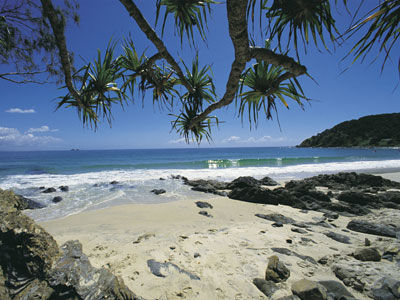
With more than 80 per cent of Australians living within 50 kilometres of the coast, the beach has become an integral part of our famous laid-back lifestyle. From Saturday morning surf-club training for young ‘nippers’ to a game of beach cricket after a barbeque, we love life on our sandy shores. We jostle for a spot on packed city beaches, relax at popular holiday spots and drive to secret, secluded beaches in coastal national parks. We go to the beach to enjoy the sun and surf or to sail, parasail, fish, snorkel, scuba dive and beach comb. It’s where we socialise and play sport, relax and enjoy romance. It’s also the site for celebration. On New Year’s Eve, revellers dance in the sand and watch fireworks at Manly and Bondi beaches in Sydney and Glenelg in Adelaide. Many beaches host citizenship ceremonies on Australia Day and on Christmas Day up to 40,000 international visitors converge on Bondi Beach wearing Santa hats and swimming costumes. Australia’s most famous beaches - Bondi and Manly in Sydney, St Kilda in Melbourne, Surfers Paradise on the Queensland Gold Coast, Cottesloe in Perth and Glenelg in Adelaide – attract locals as well as international tourists.
Multiculturalism: diverse food, festivals and faith
Since 1945 more than six million people from across the world have come to Australia to live. Today, more than 20 per cent of Australians are foreign born and more than 40 per cent are of mixed cultural origin. In our homes we speak 226 languages - after English, the most popular are Italian, Greek, Cantonese and Arabic. Our rich cultural diversity is reflected in our food, which embraces most of the world’s cuisines and artfully fuses quite a few of them. You’ll find European flavours, the tantalising spices of Asia, Africa and the Middle East and bush tucker from our backyard on offer everywhere from street stalls to five star restaurants. Tuck into Thai takeaway, dine out on perfect Italian pasta, do tapas in our city’s Spanish strips and feast on dumplings in Chinatown. You can also embrace our melting pot of cultures in the many colourful festivals. See samba and capoeira at Bondi’s Brazilian South American festival, dance behind the dragon parade during Chinese New Year or stroll through streets transformed into a lively piazza during the annual Italian celebrations. As a nation, we embrace a rainbow of religious belief and you’ll find Catholic and Anglican churches, Hindu, Sikh and Buddhist temples, mosques and synagogues lining our streets.
Australian innovations: from the Hills Hoist to Penicillin
Australia’s unique geography and relative isolation has made it a fertile ground for new ideas. In 1879, Australians developed a way for ice to be manufactured artificially, allowing us to export meat to Great Britain on refrigerated ships. In 1906, the surf lifesaving reel was designed so lifesavers could reach distressed swimmers with a rope attached to their vests. In 1929, Alfred Traeger built a pedal-powered radio as the communications for the Royal Flying Doctor Service.
Australians were also responsible for more everyday inventions such as notepads (1902), aspirin (1915), the pacemaker (1926), penicillin (1940) the Hills Hoist clothesline (1946), the plastic disposable syringe (1949), the wine cask (1965), the bionic ear (1978), dual-flush toilet flush (1980), anti-counterfeiting technology for banknotes (1992) and long-wearing contact lenses (1999).
Long before European colonisation, the Aboriginal people were already leading the world. They invented the aerodynamic boomerang and a type of spear thrower called the woomera. They were also the first society to use ground edges on stone cutting tools and the first to use stone tools to grind seeds, everyday tools which were developed only much later by other societies.
Culture cravings: theatre, film, books and visual art
From theatre to literature, Australians have a quiet love affair with the arts. We flock to the movies and our attendance at galleries and performing arts is almost double that for all football codes. Our cities play host to a huge array of cutting-edge cultural festivals, and offer music, theatre and dance performances and art exhibitions every day of the week. See traditional Aboriginal dance performance by the Bangarra Dance Theatre, throw yourself into the WOMADelaide international music festival in Adelaide and soak up theatre, ballet, opera and painting in Brisbane’s huge cultural centre on South Bank. In smaller towns you can catch performances by local musicians and see hand-made art and craft.
Australia's facts
Our Landscape
A wide, brown land
Australia is the sixth largest country in the world. It's about the same size as the 48 mainland states of the USA and 50 per cent larger than Europe, but has the lowest population density in the world - only two people per square kilometre.
Beach paradise
Australia’s coastline stretches almost 50,000 kilometres and is linked by over 10,000 beaches, more than any other country in the world. More than 85 per cent of Australians live within 50 kilometres of the coast, making it an integral part of our laid-back lifestyle.
Our island home
Australia is the only nation to govern an entire continent and its outlying islands. The mainland is the largest island and the world’s smallest, flattest continent.
Our exports
Opals in our eyes
Australia produces 95 per cent of the world's precious opals and 99 per cent of its black opals. The world’s opal capital is the quirky underground town of Coober Pedy in South Australia. The world’s largest opal, weighing 5.27 kilograms, was found here in 1990.
Gold galore
Kalgoorlie in Western Australia is Australia's largest producer of gold. It also embraces the world's largest political electorate, covering a mammoth 2.2 million square kilometres.
Merinos and cattle calls
Australia's 85.7 million sheep (mostly merinos) produce most of the world's wool. With 25.4 million head of cattle, Australia is also the world's largest exporter of beef.
Our Record-Breakers
Natural legends
Queensland’s Great Barrier Reef is home to the world’s largest oyster, weighing up to 3 kilograms, while the world’s longest earthworm, stretching up to 4 metres, is found in Gippsland in Victoria. The heaviest crab, weighing up to 14 kilograms, is found in Bass Strait near Tasmania. Australia’s tallest mountain is Mt Kosciuszko, which is 2,228 metres above sea level.
Longest road, rail and fence
The world’s longest piece of straight railway track stretches 478 kilometres across South Australia’s vast, treeless Nullarbor Plain. Australia’s longest stretch of straight road - 148 kilometres – is on the Eyre Highway in Western Australia. It’s just a tiny portion of the 2,700 kilometre sealed road that takes travellers from Perth to Adelaide. The world's longest continuous fence – the dingo fence – was built to keep sheep safe from Australia's native dog and runs for 5,531 kilometres through central Queensland and South Australia.
Our Flora and Fauna
A hopping icon
The iconic kangaroo is unique to Australia and one of our most easily recognised mammals. There are an estimated 40 million kangaroos in Australia, more than when Australia was first settled.
Unique wildlife
Australia developed a unique fauna when it broke away from the super-continent Gondwana more than 50 million years ago. Today Australia is home to a wealth of wildlife not found anywhere else in the world. We have around 800 species of birds, half of which are unique to this country. Our marine environments contain more than 4,000 fish varieties and tens of thousands of species of invertebrates, plants and micro-organisms. About 80 per cent of Australia's southern marine species are found nowhere else in the world.
Flourishing flora
Australia also supports at least 25,000 species of plants, compared to 17,500 in Europe. That includes living fossils like the Wollemi pine and the grass tree, and brilliant wildflowers. There are over 12,000 species in Western Australia alone!
Culture of Australia
An ethnic melting pot
Since 1945 more than six million people from across the world have come to Australia to live. Today, more than 20 per cent of Australians are foreign born and more than 40 per cent are of mixed cultural origin. In our homes we speak 226 languages - after English, the most popular are Italian, Greek, Cantonese and Arabic.
Big country, big ideas
Australians invented notepads (1902), the surf lifesaving reel (1906), aspirin (1915), the pacemaker (1926), penicillin (1940) the Hills Hoist clothesline (1946), the plastic disposable syringe (1949), the wine cask (1965), the bionic ear (1978), dual-flush toilet flush (1980) anti-counterfeiting technology for banknotes (1992) and long-wearing contact lenses (1999).
Aboriginal advances
Believed to be the world’s oldest civilization, Aboriginal people have lived and thrived on this continent for more than 50,000 years. Aboriginal societies made many unique advances long before the Europeans arrived. They invented the aerodynamic boomerang and a type of spear thrower called the woomera. They were also the first society to ground edges on stone cutting tools and the first to use stone tools to grind seeds, everyday tools developed only much later by other societies.